
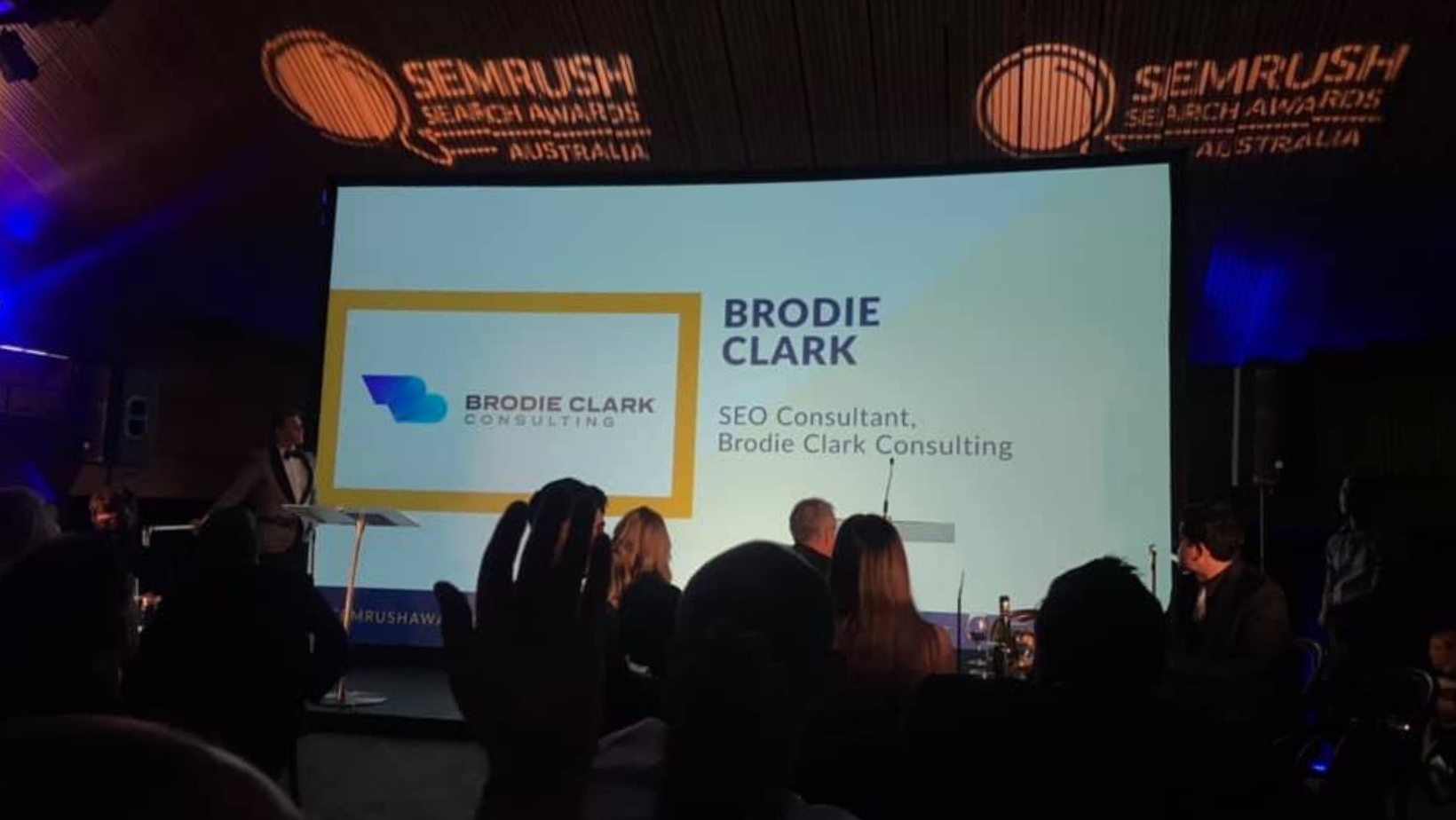
Brodie Clark is an independent SEO and organic growth consultant based in Melbourne, Australia, specialising in large-scale and complex websites across eCommerce, marketplaces, and publishing. With over 10 years of experience, he previously held senior roles at leading Australian agencies before launching Brodie Clark Consulting in 2019.
Brodie is a well-known voice in the search industry, sharing insights on LinkedIn and X with a friendly, approachable style and unmistakable Australian charm. His SERPAlert newsletter is a must-read for keeping up with SERP feature changes.
1. If I remember correctly, your first steps in SEO started with your mum’s eCommerce business. What lessons from that early stage still shape how you work today?
It was! While I didn’t really understand what SEO was back then, I was mostly trying to use keywords that I thought were relevant and try to add them to various parts of pages to see if rankings changed. That sort of early experimentation is something that will be consistent across anyone’s career in SEO.
2. After years in agencies and now as an independent consultant, what pushed you to make the move to full-time consulting back in 2019?
Like many, I’m not a fan of working for anyone else. I would rather generate my own business and manage things on my own terms. For anyone starting their own consultancy, you really need to have that drive and a long-term view of making it work, otherwise it will be very difficult.
3. A lot of professionals learn from your content, especially around SERP features and technical SEO. Who do you learn from today, or which newsletters and voices do you regularly follow?
Some of the people I’m always keeping an eye out for in my social feed include: Chris Long, Barry Schwartz, Lily Ray, Aleyda Solis, Kevin Indig, Cyrus Shepard, just to name a few.
4. Working with large-scale marketplaces, eCommerce sites and publishers exposes you to very complex challenges. Which type of SEO problem do you enjoy solving the most?
It’s always a great feeling when you can discover something at scale that will have a meaningful impact on a business. For eCommerce, this can vary quite a bit based on the niche they are in, but anything related to merchant listing performance on PDPs is an enjoyable one due to the overlap it has with GMC Next. Product feeds, more generally, can be quite complex, so every time I’ve solved something difficult in that area for a client, I end up learning something new that strengthens my understanding of broader eCommerce systems.
5. Are most of your clients based in Australia and the US, or has that mix changed in recent years?
About half of all my work happens in Australia. The rest is primarily in the US and Europe. This split has been reasonably consistent since I started consulting, but I am likely doing more US-based projects now than I have in previous years.
6. Sharing timely insights on LinkedIn and X requires constant awareness of changes. How do you manage content creation when Google rolls out updates or tests so frequently?
I try to let it come naturally rather than forcing it, but there are often quiet periods in the space where I try to share insights from client experiences also. I’ve been consistently sharing updates on LinkedIn/Twitter for almost a decade now, so it does become a habit after a while and less of a chore. When you’re self-employed, you effectively need to be “always on” anyway if you want the business to be sustainable, so it should be something that is inherent in your role.
7. Google’s free listings and product grids are becoming harder to ignore. What’s one thing eCommerce brands are still underestimating about them?
Brands are starting to prioritise them now, which is great to see. E-commerce brands that want to focus on AI performance underestimate how intrinsically linked performance within free listings is to generative results that reference PDPs. The strategy should be intertwined, rather than as something that should be assessed within a silo.
8. Google’s Web Guide and hybrid search interfaces point to a very different SERP structure. What excites you most (and what concerns you) about this shift for SEO?
It’s hard for me to believe that Web Guide will become a default in any capacity. It is even a bit surprising that it has become the default within labs. Google has been simplifying the SERP from a feature standpoint for a while now, so a more generative layout is likely inevitable in some sense, which may be a challenge for informational content in particular.
9. John Mueller once said that you “regularly do awesome stuff” that even gets shared internally at Google. What does it feel like to receive that kind of recognition directly from the source?
He did, which was pretty awesome, and I was very appreciative at the time. It is very unusual for anyone at Google to be this direct, which I greatly appreciate to this day.
10. Melbourne has a great lifestyle. What does a perfect sunny weekend there look like for you when you really want to switch off?
Going out to Daylesford or Castlemaine on a sunny weekend is always a good idea.