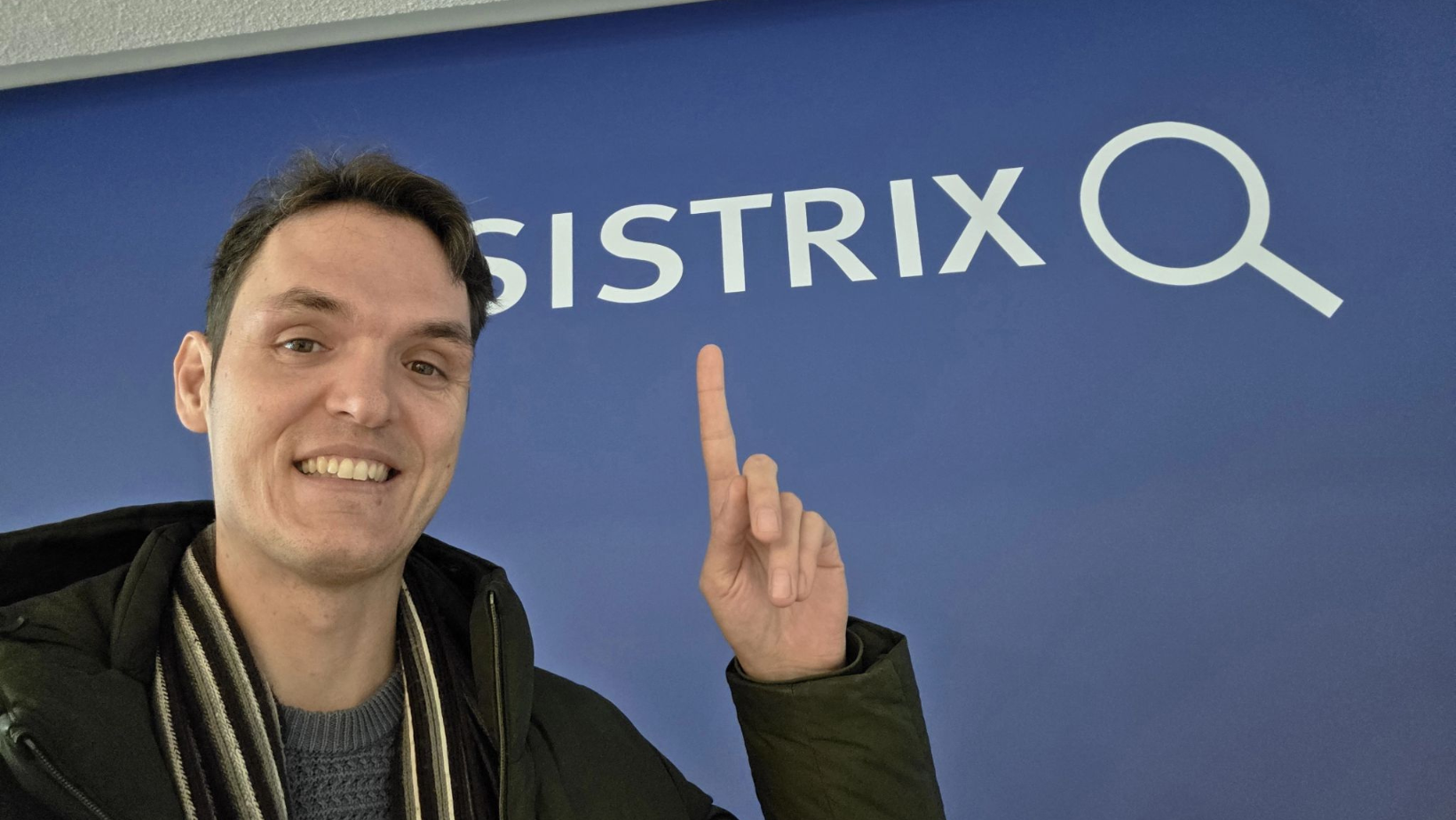
Nicolas Audemar is a Strategic Visibility Advisor and founder of Hola Que Tal, helping companies expand across France, Spain, Germany and Benelux. Former Country Manager France at SISTRIX and now Strategic Visibility Advisor, Nicolas sits at the intersection of SEO, branding and international growth.
In this interview, Nicolas shares his perspective on French search culture, why branding and SEO can no longer be separated, and how businesses should think about visibility in the age of AI.
1. France has a very particular digital and SEO culture. What makes the French market so different when it comes to search visibility and branding?
France has a very particular approach to digital, and especially to SEO, because culture plays a much bigger role than in many other markets.
First, you need to understand that France is not just one homogeneous market. It’s highly regionalized – not only economically, but culturally. Even if everyone speaks French, vocabulary, references, and emotional triggers vary a lot depending on the region. What resonates in Paris might not work in the South-West, where rugby culture is strong, or in the North, where values like solidarity are more deeply rooted.
This cultural layer directly impacts how people search, click, and trust brands.
On the SEO side, France has historically been very “link-driven”. There’s a running joke I often make: the three pillars of SEO in France are backlinks, backlinks, and backlinks. It reflects a reality: the market has long relied heavily on link building as the main growth lever. The risk is that when French companies expand internationally – for example to Spain – they try to replicate the same approach, buying links and expecting results… while in reality, true popularity cannot be bought, it has to be earned.
And this is where branding becomes critical.
In France, branding is extremely subtle and intellectual. It’s a culture of nuance, wordplay, and implicit meaning. Messages are not always direct: they often require interpretation. People take time to process, reflect, and then engage.
What works is not loud marketing, but precision, cultural alignment, and depth. That’s why succeeding in France requires more than SEO execution: it requires cultural understanding.
For example, when I started developing SISTRIX in France in 2018, the brand was almost unknown. Today, it has become one of the most recognized SEO tools in the market – not just through visibility, but through credibility and trust. This kind of growth doesn’t come from tactics alone, but from aligning SEO, branding, and cultural codes.
2. Branding and SEO are often treated separately. Why do you think that approach no longer works?
SEO and branding used to be treated a few years ago as two separate disciplines – and for a while, that actually worked.
In the early days of search, it was possible to build a brand almost entirely through SEO. Big players were not yet fully present online, and Google often rewarded well-optimized websites even if the brand behind them was unknown. That’s how many digital-first companies emerged. Think of Amazon, which initially had no physical presence, or more niche examples like Voyage Privé in the travel industry. Visibility created awareness, and awareness created the brand.
But this model no longer works the same way today.
Google has evolved. Its goal is no longer just to rank relevant content, but to rank trustworthy entities. That’s where concepts like E-E-A-T (Experience, Expertise, Authoritativeness, Trust) come into play. Search engines are now trying to answer a fundamental question: “Can I trust this brand?” And trust cannot be faked with SEO alone.
But there’s another key shift: search behavior – or “Search Intent” according to Google. Beyond informational queries, the most valuable searches today are navigational: when users directly search for a brand. That’s when you know you’ve succeeded: you’re no longer competing for attention… you own it. In French, we often refer to this as saillance: being top-of-mind. It’s like renting space in someone’s brain. And you don’t achieve that with keywords. You achieve it with presence, repetition, and perception.
Traditionally, SEO is built on technical performance, content, and – the third pillar that is often underestimated – popularity. And popularity is nothing else than branding expressed in the ecosystem: mentions, reviews, conversations, social signals, community trust. In other words, what people say about you when you’re not in the room.
Now, if you separate SEO and branding today, you create a gap: SEO brings traffic, branding builds trust. But without trust, traffic doesn’t convert – and increasingly, it doesn’t even rank.
That’s why modern SEO is no longer just about optimizing pages. It’s about earning attention, trust, and preference. A good SEO today must understand technical foundations, master content strategy, and – most importantly – win the user’s heart. Because in the end, Google is just reflecting that.
3. AI is reshaping how users discover brands. What strategic changes should businesses start making now?
I wouldn’t fully agree with the idea that AI is already reshaping traffic in a massive way – at least not yet. If you look at the data today in 2026, traffic coming directly from AI interfaces is still relatively marginal. However, what is changing (and this is key) is influence. AI is increasingly shaping the decision-making journey.
From awareness to consideration, users are now interacting with AI to explore options, compare solutions, and discover brands. And then, at the decision stage, they often go back to search engines – but with something new: a brand already in mind. This is why we’re seeing a rise in branded searches. AI doesn’t always send traffic… but it plants the seed.
So what should businesses change? Not everything. But they need to evolve intelligently. The mistake would be to chase “AI hacks”. The right move is to strengthen what already works – and make it AI-compatible.
1. Structure your content for machines and humans. AI systems consume content differently. You need to use structured data like Schema.org, clearly define content types (articles, FAQs, products…), and make your pages easily interpretable. But also – and this is critical – improve readability. This is where chunking comes in: creating content blocks that are self-contained, clear, and quotable. Each section should be able to live on its own, because that’s how AI extracts and reuses information.
2. Design for scannability, not just SEO. This is not only about AI – it’s about modern users. Clear sections, visual hierarchy, key insights highlighted, fast consumption. AI is just pushing us to do what we should have already been doing: making content easier to read, understand, and reuse.
3. Double down on popularity, not just links. If AI recommends brands, it’s not random. It’s based on signals like reviews, mentions, authority, and real-world trust. This connects directly to what I call the third pillar of SEO: popularity. Encourage reviews. Be present in conversations. Build a reputation that exists beyond your website.
4. Think beyond Google. Search is no longer limited to traditional engines. Users, depending on the buyer persona, now search on TikTok, Instagram, Facebook, YouTube, and Reddit. These platforms are discovery engines – and AI is accelerating this shift. Remember my quote: “Wherever there’s a search engine, there’s SEO.”
5. Visibility feeds AI – not the opposite. Here’s the key insight: AI doesn’t invent visibility, it amplifies what is already visible. When AI performs query expansion – what we could call “query fan-out” – it relies on existing search results. So if you rank well in search, you increase your chances of being cited in AI.
AI is not a revolution that replaces SEO. It’s an acceleration layer. The fundamentals don’t change: be clear, be useful, be trusted, be visible. But the level of execution required is higher. So don’t panic. Just do better SEO – and make it easier for machines to understand and reuse.
4. Reputation platforms and third-party reviews have a strong presence in French SERPs. How much power do these platforms really have over brand perception?
Honestly, third-party platforms today are not just part of SEO anymore – they’re a core layer of how a brand exists online.
If I simplify it, I use a concept I call “entity gravity”. The idea is simple: the more your brand is consistently mentioned, reviewed, and validated across trusted platforms, the more trust it accumulates – and that creates a kind of gravitational pull. Platforms like Google Business Profile, Trustpilot, or Google Maps are traffic sources, yes, but they are actually shaping that gravity.
There’s also a fundamental bias – both from search engines and AI systems: they trust what others say about you more than what you say about yourself. Your website is your narrative. Third-party platforms are perceived as reality. And that changes everything. Because reviews, ratings, discussions – they often influence perception before users even click on your site.
Then you have the cultural layer, which is super important in France. Not all platforms carry the same weight. For example, something like Le Routard in travel has huge trust. Reddit is very visible in SERPs, but culturally, many French users don’t fully embrace it yet. So you can’t just copy a global strategy – you need to localize it.
And today, managing all of this is basically modern SEO. Online reputation management is no longer just PR – it directly impacts rankings, CTR, and even AI recommendations. We’re talking about things like having a strong rating – ideally above 4.5 – responding to reviews, and reacting quickly.
Visibility today is no longer about ranking one website. It’s about being present everywhere that validates your existence: review platforms, maps, directories, forums. Because AI doesn’t rely on one source. It aggregates everything.
So in the end: SEO makes you visible. Branding makes you memorable. But third-party platforms make you credible. And today, credibility is what actually drives perception – and ranking. “Your website builds your message. The web builds your reputation. And reputation is what ranks.”
5. In highly competitive markets, what usually makes the difference between visibility that converts and visibility that doesn’t?
In highly competitive markets, visibility alone is just not enough anymore.
The real difference is quite simple: visibility that converts is visibility that people trust and recognize. Visibility that doesn’t convert is just exposure with no real impact.
First, brand plays a huge role. When users see multiple results, they don’t analyze everything in detail -You often describe popularity as the third pillar of SEO. Why is it so underestimated? they shortcut. And that shortcut is trust. A strong brand reduces uncertainty. So even if two websites rank side by side, one gets the click and the other is ignored. Same visibility, completely different outcome.
Then there’s what I call the “zero-click trap”. Some types of visibility are structurally non-converting – things like definitions, weather, or very simple queries. Google answers them directly. So even if you rank, the click never happens. And with AI Overviews, this is only getting stronger. You can be visible and still get no traffic.
So the real question becomes: when does Google actually send traffic? Only when it needs something it cannot fully replicate. That’s where the difference is. If you bring original insights, real experience, unique angles (or even better, proprietary data) then you become worth clicking. Proprietary data is probably one of the biggest advantages today. It’s hard to copy, it builds credibility, and it positions you as a source. That’s what transforms visibility into conversion.
And when you combine strong brand, unique value, and external validation, you create a loop: visibility, trust, click, experience, mentions, more visibility.
Ranking is just the entry ticket. The real difference is: do people recognize you, do they trust you, and do you offer something they can’t get elsewhere? If not, you’ll be visible – but completely replaceable. “Ranking gets you seen. Differentiation gets you clicked. Trust gets you chosen.”
6. You often describe popularity as the third pillar of SEO. Why is it so underestimated?
Because popularity is branding expressed through the ecosystem. As Nicolas explains, traditional SEO has historically focused on technical performance, content, and backlinks. However, what often determines long-term visibility is what people say about a brand when the brand itself is not present.
Mentions, reviews, conversations, social signals, and community trust all contribute to popularity, which increasingly influences rankings, visibility, and brand preference.
7. What role do branded searches play in a successful SEO strategy today?
According to Nicolas, the most valuable searches are often navigational searches: when users actively search for a brand. That’s when a company is no longer competing for attention but owns it. He describes this as saillance in French – being top of mind and effectively renting space in someone’s brain through presence, repetition, and perception rather than keywords alone.
8. What’s the biggest misconception businesses have about AI and SEO right now?
That AI requires a completely different strategy. Nicolas argues the opposite: AI does not replace SEO – it amplifies it. The fundamentals remain unchanged: be clear, be useful, be trusted, be visible. Rather than chasing AI hacks, businesses should focus on creating structured, understandable content and building authority that machines can easily interpret and reuse.
9. What is one of the biggest mistakes companies make when expanding internationally?
Trying to export tactics instead of adapting to culture. Nicolas highlights how many French businesses entering markets such as Spain attempt to replicate the same link-building strategies that worked in France. However, visibility and trust are deeply influenced by local culture, language, expectations, and consumer behaviour. International SEO success requires cultural understanding, not just translation.
10. If you could leave readers with one final piece of advice about visibility, what would it be?
Nicolas closes with two ideas that summarise his philosophy: “Your website builds your message. The web builds your reputation. And reputation is what ranks.” and “Ranking gets you seen. Differentiation gets you clicked. Trust gets you chosen.“
Editor’s Note: Nicolas provided extensive answers covering multiple topics. Some of the final questions have been extracted from themes already discussed during the interview for readability.