
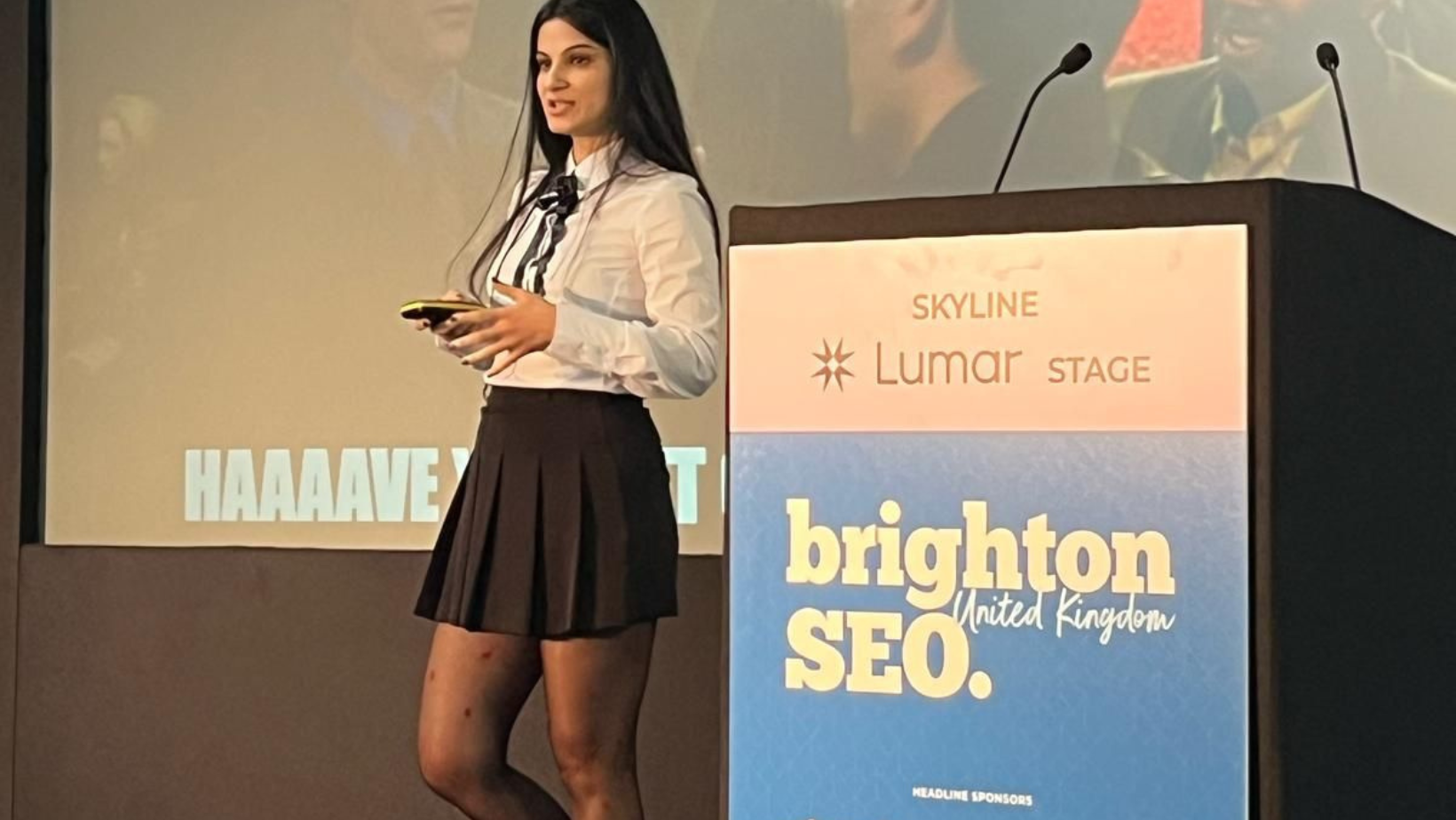
Bengu Sarica is a SaaS SEO Manager and Organic Growth Marketer, specialising in end-to-end SEO for SaaS businesses. She is a BrightonSEO and Search ’n’ Stuff speaker, and a contributor to Search Engine Journal, Search Engine Land, Wix, Moz, Sitebulb, and Advanced Web Ranking.
She’s one of those bright, talented professionals who make the industry feel safe and supportive for others.
1. Moving from content writing into leading SEO for SaaS products is a big shift. What moments shaped that transition the most?
Actually, before I started working in the SaaS field, I took a rather indirect path. First, I worked at various agencies, which meant encountering many different sectors, business models, and expectations about “what SEO should do.”
This agency background gave me the ability to adapt and recognize patterns; I started to see what was scalable, what was failing, and what was just noise.
The turning point was the shift from content writing to Tech SEO and then to SaaS SEO. SaaS shortened the learning curve for me in the best way possible. Suddenly, SEO was more than just traffic or rankings; there were many factors involved, such as trials, activation, retention, and revenue.
This shift forced me to think end-to-end and accelerated my understanding of how SEO supports business growth. Once I adopted this, there was no turning back.
2. Working in SaaS SEO often means balancing product, growth, and content teams. Where does SEO add the most strategic value today?
SEO adds the most value when it stops acting like “traffic boosting” and starts acting like a decision filter. What should we build? What should we explain better? What problems are users actually trying to solve? SEO sits at the intersection of demand, language, and intent, and when used well, it prevents teams from building overly polished things that nobody is looking for.
3. Brand recognition keeps coming up in conversations about the future of search. How does that change the way SEO strategies should be designed?
Brand recognition changes SEO strategy because visibility alone is not enough. Being present across platforms only creates value when people know why you’re there and what you’re good at.
SEO strategies shouldn’t focus on maximum visibility. To me, they should focus on clear positioning.
For example, what do users recognise you for? What problems do they trust you to solve? When that’s clear, search works differently: users don’t just find you, they prefer you. SEO stops chasing attention and starts compounding it.
4. Having spoken at events like BrightonSEO and Search ’n’ Stuff, what topics do you feel the industry is still not discussing enough?
We still don’t talk enough about how decisions are actually made in SEO. Not in theory, but in real, imperfect conditions. Data is often incomplete, timelines are complex, and stakeholders demand a certainty that doesn’t exist.
We also don’t discuss the emotional side of the job enough. Burnouts, imposter syndrome, and the constant pressure to “keep up.”
The industry shines brightest when we speak openly, learn from each other, and admit that we don’t have all the answers. Some of my favorite moments on stage or at events come from sharing that space with friends from the industry: learning, laughing, and honestly shining together.
5. AI is increasingly present in search experiences. Where does AI genuinely help SEO teams, and where does it risk replacing original thinking?
I think AI is genuinely useful when it helps you spot patterns faster, conduct broader research, and validate ideas before investing time and resources. It’s great at connecting dots you already suspect exist and reducing friction in early-stage thinking.
However, AI becomes risky when used in areas you don’t fully understand. If you rely on it to make decisions about things whose context you don’t know, it stops being a supportive tool and begins to replace thinking. That’s when strategies become shallow and interchangeable.
6. Contributing to platforms like Moz, Search Engine Journal, and Wix requires strong editorial judgment. What makes a contribution truly worth publishing today?
A strong opinion backed by experience. Today, useful contributions often come from someone who has been in the middle of the problem, tried things, failed somewhat, learned from it, and then articulated that knowledge clearly.
Strong contributions take a stand, explain the “why,” and respect the reader’s intelligence. If it looks like it could’ve been written by just anyone or anything (Ofc, I’m referring to AI-generated content here), it probably shouldn’t be published.
7. The SEO scene in Türkiye has grown significantly in recent years. How would you describe its evolution and current strengths?
It has become more confident and extrovertive. There’s a strong technical foundation, but now we’re seeing more global thinking, better communication, and more people contributing internationally.
In my opinion, the greatest strength is being a challenger and having determination. Turkish SEO experts are very successful at achieving a lot with limited resources. Their survival skills have become a superpower.
8. Leading SEO teams across different companies brings its own challenges. What skills matter most when moving from execution into leadership?
Letting go 🫠 Okay, I’m serious: prioritization, communication, and trust. Being a leader doesn’t mean being the best executor in the room. It comes from creating clarity, removing barriers, and knowing when not to intervene. Also, learning to explain SEO without slides full of acronyms is very helpful.
9. Many SEOs still plan keyword-first strategies. What signals suggest it’s time to move beyond keywords as the primary starting point?
The clearest signal is when performance looks good on paper but isn’t in reality. Imagine that your rankings improve, traffic increases. Sounds great, right? But if business impact remains flat, we can’t talk about success here.
Moving beyond keyword-first strategies means starting with user journeys, decision points, and expectations, and using keywords as supporting evidence, not the basis. Then, SEO becomes far more effective when it aligns with how people actually make choices, not just how they search.
10. And finally, how does it feel to be the best zodiac sign (Leo)? 😀
It feels correct 😂 Self-confident, sometimes dramatic, but extremely loyal and community-oriented. Leos shine brightest when surrounded by people they admire, learn from, and laugh with. This perfectly describes how I feel about my dear friends in this industry ✨