
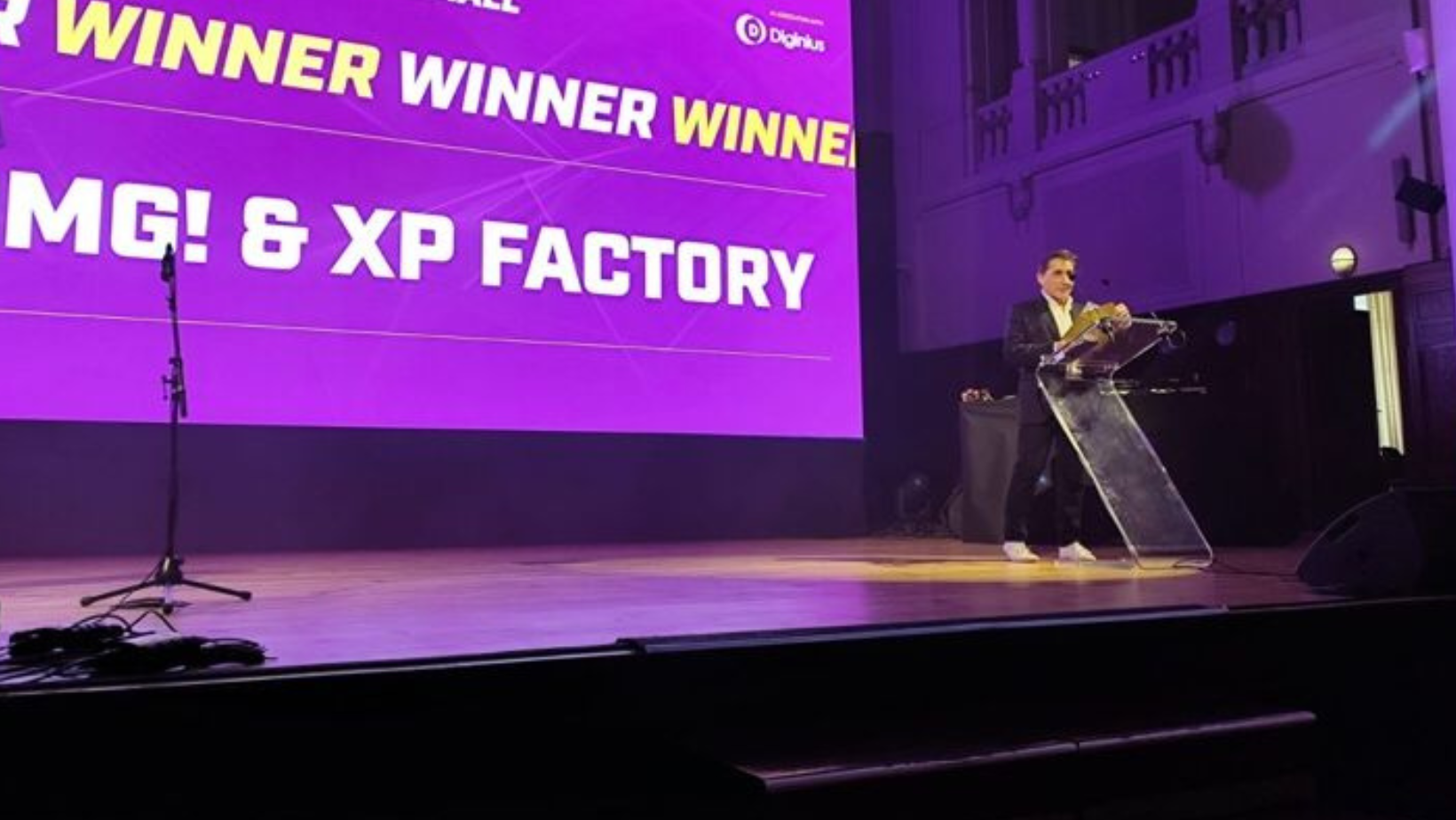
Josep M Felip is the Founder of Amplfyr and an SEO specialist focused on how AI systems understand and surface content. Based in Brighton, he helps businesses move beyond traditional SEO by prioritising entities, meaning, and visibility across AI-driven search platforms.
We’re all really excited to try his new tool!
1. Who is Amplfyr really for and what kind of professionals will get the most value from it?
Amplfyr is a content visibility engine built for B2B content writers, agencies, and SEO professionals who need to create and refresh content that’s visible in the new search paradigm, specifically AIO and AI platforms.
B2B content writers face a triple challenge: creating content at scale, targeting specific audiences, and preserving brand voice. Their primary pain points connect directly to visibility and conversions, they need their authentic voice to cut through the noise.
Agencies amplify these challenges because they operate at an even greater scale while managing multiple brand voices. Their success depends on proving ROI, which requires consistent results across diverse client portfolios.
SEO professionals navigate similar territory, but they’re caught between old playbooks that no longer work and new tools like ChatGPT that promise much but deliver inconsistently. The real frustration comes from the time wasted testing prompts that fail to produce expected results, a cycle that compounds frustration with uncertainty.
Amplfyr breaks this cycle with a clear framework that guarantees consistent results. The value proposition is straightforward: users reduce the time required to create or refresh content while gaining certainty that their work will be visible the moment they hit publish.
2. Amplfyr is built around the idea of understanding signals before content goes live. What problem are you trying to solve with the platform?
Exactly. The main problem Amplfyr solves is uncertainty. Content creators are trapped in a cycle of “publish and pray,” waiting 2-3 months to see if results materialize, or chasing “magic prompts” that rarely deliver. The reality is that most content companies publish ends up collecting digital dust in cyberspace, never reaching its intended audience.
Despite endless theorising and prompt engineering, I realised that nobody provides a consistent method for creating content that LLMs actually understand. That’s the gap Amplfyr fills.
The solution lies in the signals LLMs actively look for: structure, information gain, facts, and entity relationships. It’s not just what you put in your content, it’s how you construct it. Amplfyr makes this visible.
Users see how entities in their content relate through graphical node representations. They see how AI “reads” their content, the actual chunks it processes. They get scoring for both current and optimized content, which allows them to set realistic expectations and publish with high confidence that their work won’t disappear into the void.
The platform turns uncertainty into understanding, which transforms how creators approach their work.
3. Since October 2025 your work appears to have moved beyond day to day SEO. Do you see this as a new chapter, or more as a temporary step back?
Actually I started the Amplfyr project as a side project in February 2025. October was just the date I could commit full-time working full time after being laid off.
This isn’t a step back, it’s a step forward into the new search paradigm. Setting up a company involves different activities than daily SEO work, but the learning has been exponential. I’ve gained more knowledge in the last 2-3 years than in the previous decade.
Beyond understanding how LLMs work, how they retrieve and return answers, I’ve gone deep into RAG, vectors, and everything connecting these systems. I genuinely love learning, and all the concepts I’ve accumulated throughout my SEO career have been poured directly into Amplfyr’s foundation.
4. Why are entity relationships becoming so critical for AI systems to understand and recommend content?
Simply put, because this is how AI systems understand your content.
You can pack your content with entities, but if they’re not connected, you won’t extract any value. The relationships between concepts determine meaning, not just their presence.
This explains why so many people get poor results from ChatGPT and other LLMs, they don’t know how to instruct these systems to relate concepts properly. The entities exist in isolation rather than forming a meaningful network of understanding.
5. How does thinking about meaning before publishing change the way content should be created today?
It changes everything. Content creation is more intentional than it’s ever been. It must be laser-focused.
In my previous role, we watched organic content, specifically blogs, decline. I recommended at the time that we stop creating so much informational content because LLMs serve that intent better. Instead, we should focus on money pages, product pages, and home pages.
But I’ve learnt we don’t need to abandon TOFU content or stop producing blogs. We need to produce them intentionally better. We must create content that answers the real search intent, not just a query or keyword, but the complete user need. The answer that satisfies their actual question can be triggered by many queries (query fan-out), as we’re already seeing with prompt tracking.
Does this mean adding more entities, more concepts, more keywords? Not exactly. It means tailoring your answer to your target audience, their needs, goals, motivations, and preferred information format. Think of it like a tailor-made suit.
Will this mean less traffic? Yes. But because you’re laser-focused, you’re not wasting resources. You’ll be found by the right audience, people who are more educated, more informed, and more ready to convert. Your content ROI will be substantially higher.
6. Instead of writing for SEO, you focused on semantic understanding. What does that shift look like in real terms?
Excellent question! This represents a paradigm shift. We long moved from keywords, metas and all that stuff. What moves the needle now is how you relate concepts (entities) within your content.
First, identify your page’s main entity. All other concepts typically connect to it. The critical factor is how they relate: How does A connect to B? Is it a causal relationship? Hierarchical (part of)? or Associative (relates to)?, and so on.Understanding these relationships allows you to engineer content that LLMs actually understand and find relevant.
In Amplfyr this is the Semantic Blueprint which is part of the Amplfyr Semantic Intelligence.
7. “SEO for humans” has been central to your work for years. What does that philosophy really mean today, beyond rankings?
SEO for humans was my user-centric SEO consultancy. The driving philosophy was providing SEO consultancy in a way all stakeholders could understand. I explained concepts in depth but plainly, not dumbing them down, just providing clarity. I showed why certain actions were needed, how they affected other actions, and their impact on the entire project.
It was also a testing ground for innovative ideas, like building a website based entirely on entities. Back in 2020, we designed a site architecture for a travel site, city tours specifically. From the start, I knew it should center on the main entities: the cities and the user. The entire site was built around these main entities and user needs.
The results exceeded expectations. The site outranked major players with massive spending power. Today, it typically appears in the top 5 results with several rich snippets.
How does this apply today? It means designing your strategy around the user and their needs, from site architecture to microcopy. Do we satisfy all or most of their queries? Do we provide novel information? Do we do it better than competitors? Do we cover all possible angles? Is information easy to access? It requires significant empathy and research.
8. Which events or conferences are you most excited to attend this year, and why?
My preferred one is BrightonSEO. Maybe I’m a bit biased, as I live in Brighton 😃 but actually is one of the biggest one and a big opportunity to interchange ideas, get inspiration and do a lot of great networking.
I hope I can make it to the San Diego edition this year as well. Talks were also very good and you also have the opportunity to connect with people that otherwise you’d only know from LinkedIn. I reckon it will be even better than the 2025 edition as it will take place at the San Diego Convention center, which is massive.
I am looking forward to going to the ISS in Barcelona where I attended last November for the very first time and I was really impressed by it.
I’ll also attend EVOLVE 26 in Brighton, an AI-focused event, that gives you the opportunity to connect with people in the sector and with users looking for specific solutions with or around AI.
9. Are there any newsletters, LinkedIn voices, or professionals you’d recommend following to better understand where search and AI discovery are heading?
I’m subscribed to many newsletters, and honestly I don’t have time to read them all, but some of them are:
The AI Growth Lab by Andrew Holland
The Future of Search by Alessandro Benigni
AIMarketers by Aleyda Solis
DigitalStormWeekly from Paul Storm
On LinkedIn voices, to me, the most authoritative voices I’d recommend to follow are Andrew Holland, Mike King, Garret Sussman, Garret French, Duane Forrester, Kevin Indig, Dixon Jones, Genie Jones, Olaf Koop, Aleyda Solis and Gianluca Fiorelli.
10. Where do you usually find those shirts you wear on stage? You’ve clearly built a signature style 🙂
Hahahaha, I love nice print shirts! My not-so secret is just my amazing wife, Olga de Llera, who has an exquisite taste and a keen eye to select what better fits me. She’s definitely onto me, I can tell you 🙂