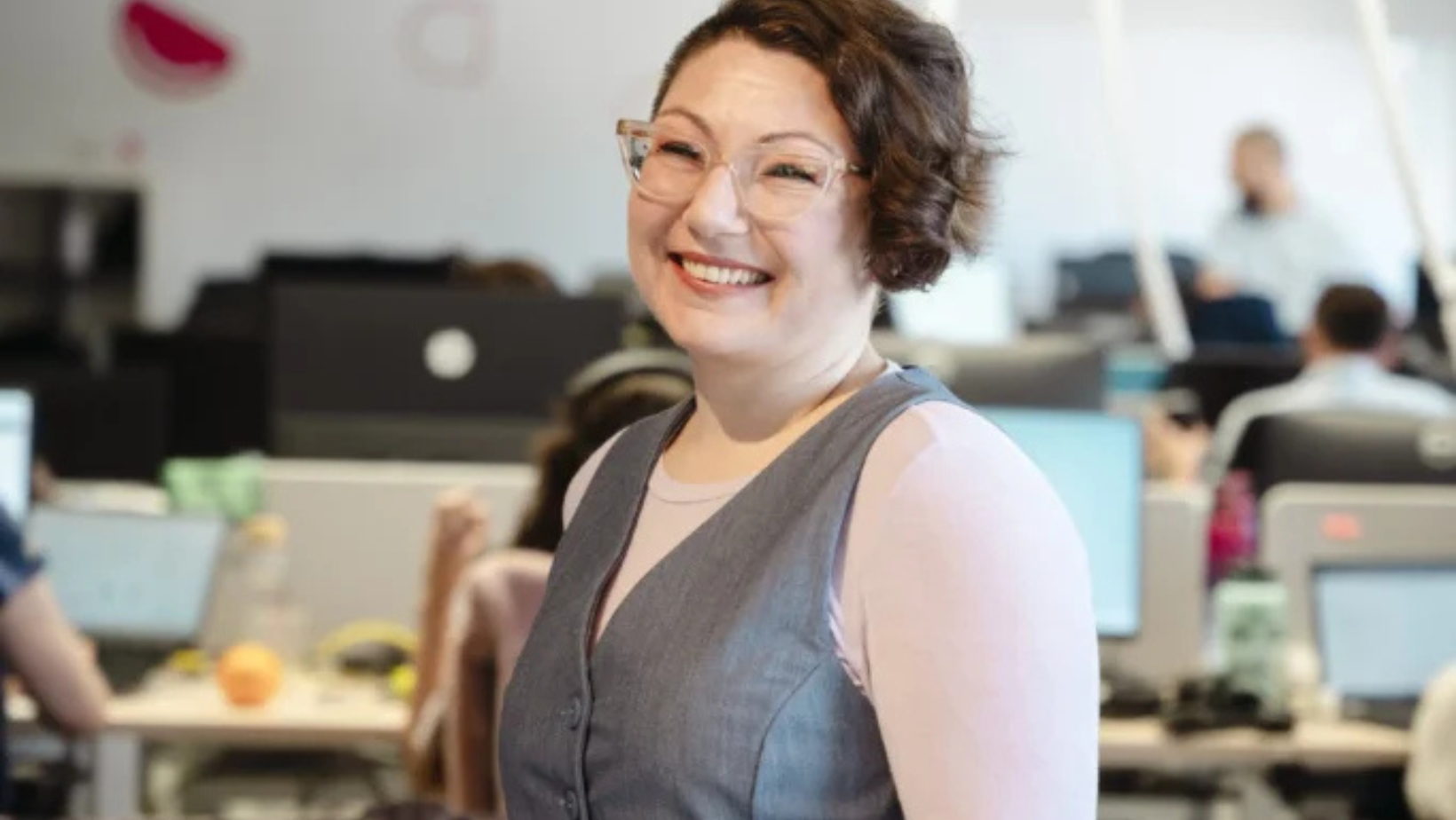
Irene Cecotti is a Senior SEO Manager & Organic Growth Strategist at Factorial, driving business-first organic growth in a product-led, data-driven environment. She has a strong background in technical SEO, content architecture, automation and cross-functional collaboration across both agency and in-house roles.
Irene is one of those genuinely kind and talented professionals that it’s a real pleasure to share space and events with.
1. You currently work as an SEO Manager at a global SaaS like Factorial. What does “organic growth” really mean in a product-led environment?
Organic growth at Factorial means focusing on what actually drives qualified leads and ROI, rather than just chasing traffic volume. It is a business-first approach where success is measured by revenue impact. This requires constant communication with the Product team; our content must address specific prospect pain points, and we must ensure the product effectively solves those problems.
2. What does a typical workday look like for you?
It’s intense and really exciting. We often joke that one week at Factorial feels like a month because of the constant pace of change, testing, and new projects. To stay focused, I rely on a Slack automation that prompts me every morning with my task list; it’s my anchor for navigating the day.
I usually start by reviewing lead performance. If I notice certain pages underperforming, I use a Regex builder to analyse their performance in Search Console compared year over year. I always work backwards from leads to traffic, making sure I’m prioritising what actually drives real business value.
3. What do you enjoy most about living in Barcelona?
The number of opportunities for events and meetups, and how easy it is to get around by bike. The local SEO community is incredible and a huge source of personal support. Beyond work, I can channel my energy into a wide range of activities, from seaweed cooking courses to boxing and circus classes.
4. You’ve worked both agency-side and in-house. What’s the biggest mindset shift required when moving from one to the other?
The shift is moving from recommendation to implementation. In an agency, you focus on showing the work you have done; in-house, the focus is on showing the tangible results of the implementations you suggested.
5. Why is SEO education across teams becoming increasingly important?
Because of the shift toward AI-driven search. SEO now requires collaboration with Media and Brand teams to gain visibility in multimodal SERPs—including image, video, and YouTube carousels. Education across departments prevents decisions based on AI hallucinations and encourages “learning hunger.” It ensures that when someone asks an LLM an SEO question, there is a knowledgeable person there to verify the output.
6. Which technical improvements tend to deliver the biggest impact at scale in SaaS websites?
Refining the URL structure to ensure a clean path and a clear, logical architecture for search bots is the most impactful technical lever at scale.
7. What are the most common SEO risks during a relaunch, and how do you mitigate them?
Lack of planning is the biggest risk. You need both a pre-launch and post-launch checklist. Everything must be tested in a staging environment to identify technical issues before they go live. If the pre-launch conditions aren’t met, the launch should be delayed, even if it causes friction with stakeholders. Technical Tip: Use Screaming Frog in “Comparison Mode.” Crawl the site immediately before and after the launch to audit changes and status codes instantly.
8. Link building is still a sensitive topic in SEO. How do you approach building authority in a way that feels sustainable and aligned with brand values?
Authority now stems from both links and brand mentions. We work closely with PR agencies and our internal brand teams to earn mentions and build sustainable partnerships that align with our brand identity.
9. Content architecture and long-tail strategy are key parts of your approach. How do you decide which topics are worth investing in from a business perspective?
For architecture and pruning, we export GSC data and use custom extractions to check the author and publication/edit dates against lead conversion data. Our long-tail strategy is driven by internal business data. We focus on what has already proven to convert for our Ideal Customer Profile (ICP) and deprioritize high-volume keywords that do not align with our business goals.
10. What skills do you think senior SEOs will need to master to stay relevant in an AI and product-led growth landscape?
Communication is vital for navigating multimodal search—working with media teams on YouTube SEO or dev teams on structured data. Analytical skills are essential for tracking traffic from LLMs via GA4 and Looker. Additionally, automation is a core skill; if a task is repetitive, it should be automated using tools like Gemini or custom scripts. Finally, as top-of-funnel traffic patterns shift, knowledge of UX and CRO becomes critical to maximize the value of the remaining traffic.