
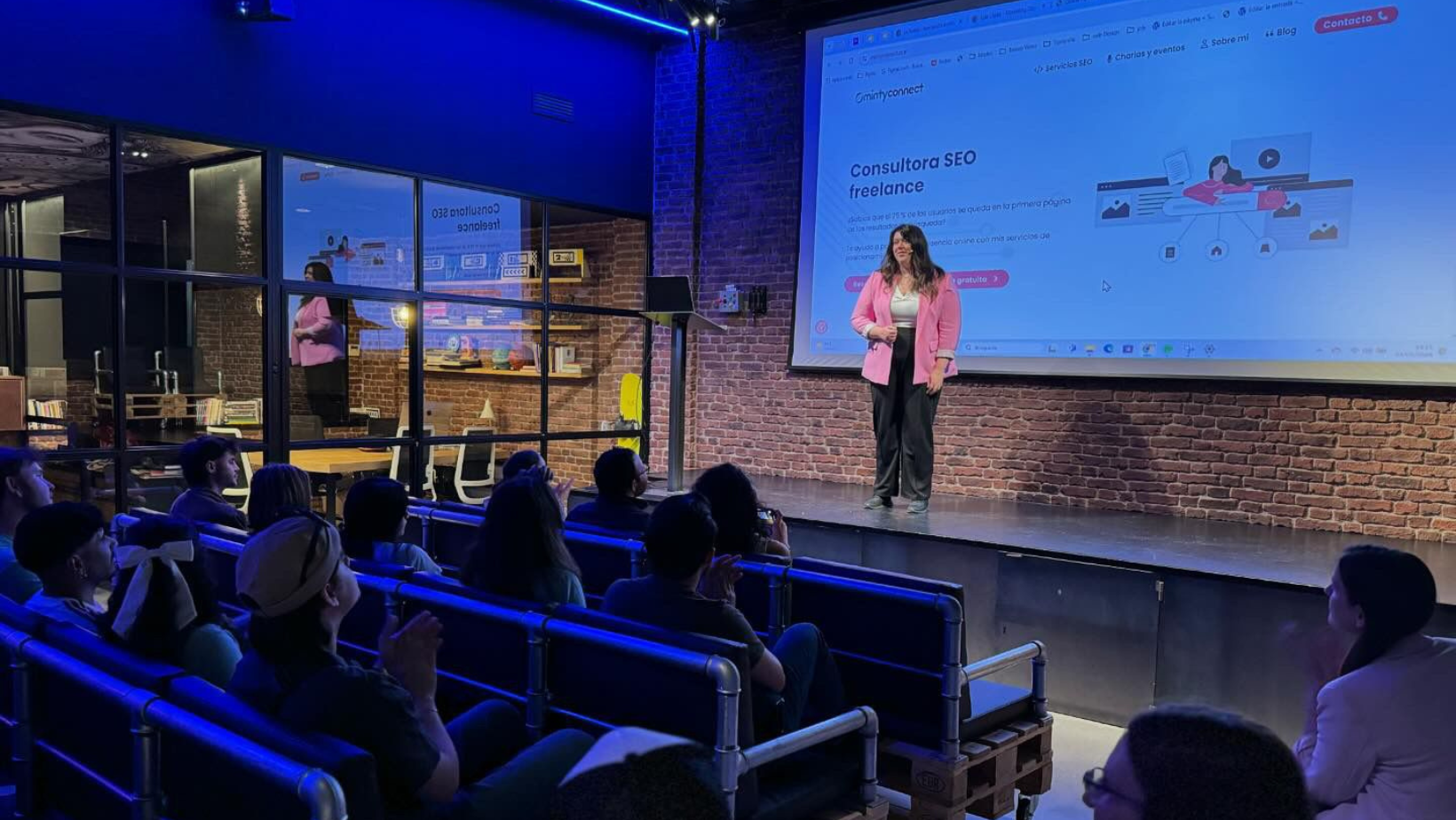
Raquel González is the CEO of Seoulful Connect and an international SEO specialist helping brands grow across Korean, European and US markets. Known for her expertise in localization and cross-border growth.
She is also one of the most generous and intelligent people in the Search industry, always willing to share her knowledge and help others succeed. We love you, Raquel!
1. We’ve heard you’re moving to South Korea in February for six months. What are your plans while you’re there?
You heard well! As many people know, I’ve lived in South Korea for about six years, but while I was there, I was not yet a business owner, nor had I shifted my career into SEO. When I left, I saw the huge market potential and the opportunity that opened up for me as someone who lived the culture, used its digital platforms daily, and spoke the language.
This time it’s more than just a visit. I’m currently in the process of changing my visa status to officially establish Seoulful Connect in Korea, too, which is something I’ve been working toward for a while.
I also joined the hosting team of the Search SEOul conference, the first global SEO conference in South Korea, where I even had the chance to be one of the first speakers. We’re hosting it at the beginning of September, and I’d really recommend joining us if you’re looking to experience something new.
2. What would you recommend visiting to someone traveling to Seoul for the first time?
I would obviously recommend visiting the main tourist attractions if it’s your first time, like Namsan Tower, Gwanghwamun Palace, and the Hangang River, and also traveling to other cities like Busan or Jeonju.
But I think the real charm of Korea is getting lost in its streets. The capital, Seoul, is always vibrant and awake, and it doesn’t matter where you walk or what time of day it is: you will always find something to do, with great ambiance and a strong sense of security (as a woman, you can walk alone at 2 AM!).
Also, the restaurants that look old and that you might not normally go to are usually the ones with the most delicious food you will ever try.
3. What do you enjoy the most about Korean culture, or what fascinates you the most about it?
People, in general, are so welcoming and really make you feel integrated. In Korean, there is a word called “정” (jeong) that has no direct translation but conveys a sense of bond, attachment, love, and loyalty toward someone. That’s the way Koreans will treat you, and I think it’s amazing.
I also love the sense of order inside the chaos. Even in public transportation or on the street, it can be packed with people, but you don’t feel overwhelmed because there is this underlying sense of order.
4. Beyond the technical side, what’s the biggest mindset shift companies need when entering markets like South Korea?
What I see many companies doing is entering the Korean market with a Western mindset.
Before expanding, they have to be open to the idea that all the strategies and values that worked in their base market probably won’t work in this one.
Korea and other countries in APAC have different cultures, ways of thinking, values, and ways of doing things. If you go into this market with a closed mind, you won’t succeed. Expanding into a new country is not just about translating your website; it’s about understanding your customer.
5. In simple terms, how would you explain the role of Naver within Korea’s search ecosystem to someone new to the market?
South Korea has a completely different digital ecosystem from the one we are used to in Europe. For starters, they use a different messaging app called KakaoTalk, and Google Maps doesn’t work; you need to use Naver Maps. They have their own e-commerce giant, Coupang, and even their own payment systems, like Toss Pay.
Naver is their own search engine, but I would describe it more as a portal, where all these tools are integrated and work perfectly together.
One of the biggest misconceptions, though, is that you must optimize for Naver if you want to expand to Korea, and that’s not 100% true.
While it is recommended, since it’s a platform Koreans use daily, you still need to analyze whether your product or service has more search volume on Google or on Naver, as Koreans also use Google regularly. Also, Naver is fully in Korean, so it can be difficult to optimize for if you don’t have a team that speaks the language.
In other words, my team can handle the strategy and localization side, but there’s another layer that goes beyond SEO: Koreans tend to be cautious about foreign brands they’ve never heard of, so having a Korean representative, someone who can actually walk into a room and build that trust in person, makes a real difference. The digital presence gets you found; the human connection gets you in the door.
6. What was the original idea behind founding Seoulful Connect, and what gap were you trying to solve?
I’m very tied to South Korea, and I wanted to find a way to keep this connection in a business sense, beyond my other markets.
The gap I saw was clear: European and Korean SEO worlds barely talk to each other, mostly because of the language barrier. I wanted to become that intermediate person, supporting Korean companies entering European or US markets, and Western companies trying to navigate Korea, which has its own platforms, rules, and consumer expectations.
The other thing I kept seeing was international SEO agencies treating localization as an afterthought, basically just translation. Coming from a background in translation and localization, I’ve seen firsthand how getting the cultural layer right can make or break your success in a new market.
7. What’s the hardest part of helping brands expand internationally that most people don’t usually see?
For me, the hardest part isn’t the strategy itself. The strategy usually follows a clear structure and common sense. If a brand wants to expand to Germany, for example, you research the culture, search behavior, patterns, and market demand, and then adapt its website, copy, and even images. You work on the technical side, and all of that.
The most difficult part is actually before any of that starts. That’s when you have to help clients understand that this is not a quick solution but a long-term investment. They need to be ready before starting.
Being ready means having the right tools in place: a team that speaks the language (like customer service), the resources to manage logistics and documentation, and the ability to ensure full compliance with local regulations. For e-commerce brands expanding into another country, this means having the right approvals, someone on the ground to handle shipping (usually a local logistics or fulfillment partner), and a clear returns process.
Having all of this in place is imperative before starting an international SEO strategy. Otherwise, you might drive traffic, but if the customer experience is bad, it won’t benefit the business. And in some markets, like South Korea, once people lose trust in a brand, it’s very hard to earn it back.
8. You often talk about “predictable brand growth” through international SEO. What needs to be in place for international SEO to become predictable rather than experimental?
For me, predictability comes from having the right foundation before you even think about rankings. That means a clear market selection based on real data and not just “we want to go global”, combined with the infrastructure to support it: localized customer service, compliant logistics, and a website that actually speaks to that audience, not just in language but in design, trust signals, and payment options.
From there, it’s about treating it as a long-term channel rather than a campaign. International SEO compounds over time, but only if you’re consistent. When clients come to me expecting results within 60 days, I explain that building brand authority in an unfamiliar market takes effort. Once that mindset shift happens, we can build something sustainable and more predictable.
9. Your messaging highlights the importance of adapting to each market’s search behavior and digital ecosystem. Can you share an example where understanding local behavior made a measurable difference?
One that comes to mind is a water ski equipment brand I worked with. In the US, people search for “buy waterski” or “waterski equipment”, with a clear purchase intent and direct B2C.
In Korea, the same search landscape looks completely different. Koreans aren’t searching for equipment to buy; they’re searching for “가평 수상스키” (Gapyeong waterski) or “수상스키 렌탈” (waterski rental), looking for experiences and locations. The audience shifts from individual consumers to resorts and rental businesses.
If we had just translated the US strategy into Korean, we would have been targeting an audience that barely exists in that context. So we worked both angles: a fully optimized Korean e-commerce platform for consumers who do buy, and a separate B2B strategy targeting rental operators and resorts, which is where the real opportunity lay.
10. For e-commerce brands expanding globally, what are the most common mistakes you see that hurt conversions, even when traffic is growing?
Lately, I’ve been working with some e-commerce brands where the original content is duplicated across different versions of the website, there are missing hreflang tags, and overall technical issues. And the bigger the e-commerce, the more of these problems I usually see. So the technical foundation is extremely important.
Beyond that, proper localization is key. If you’re selling in the United States, for example, you need to localize prices, shipping costs, payment methods, and even return policies. I still see many websites that are half in one language and half in another, or that don’t optimize important pages like the cart and checkout.
As a user myself, I’ve experienced putting in all the effort to buy a product, only to realize at the checkout page that they don’t ship to my country or that they don’t accept foreign cards. Those small but critical details hurt conversions, even when traffic is growing.