
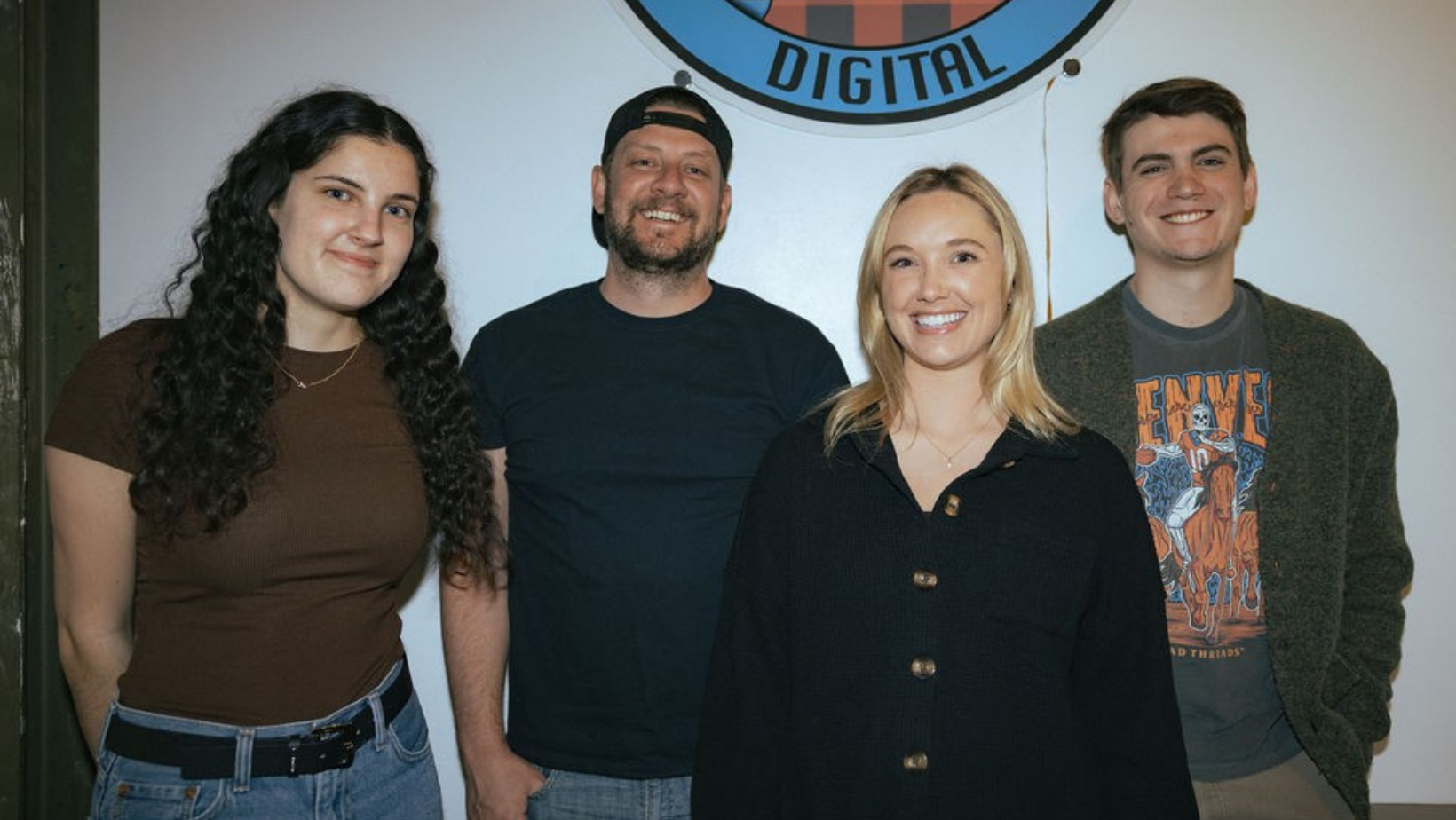
Shaun Elley is the founder of Blue Ox Digital, a paid search agency focused on aligning PPC with real business goals. He helps ecommerce and lead generation companies move beyond surface metrics like ROAS or CPA, improving performance through better tracking, smarter automation and a clear focus on revenue and profitability.
Based in Denver, Shaun combines hands-on PPC expertise with a strong commitment to transparency, the local community and long-term growth.
1. Blue Ox Digital puts a strong emphasis on aligning PPC with real business goals. Why do you think so many paid search strategies still ignore margins and profitability?
I think there are a lot of different answers to this question:
I think a lot of businesses (small businesses in particular) don’t have the ability/time to get the person in charge of PPC, whether that is in-house or agency, what they need to be able look at this level of detail. Many businesses either aren’t good at or don’t even set internal goals so asking this question up front is helpful for us to learn more about the client and their capabilities, but it also gets the client to start thinking about their goals.
Often a business has goals in mind for the ppc efforts but those won’t align with their actual business goals. So much information or blogs/linkedin posts/brags are about certain metrics – in ecom ROAS in B2B CPA or raw leads – I think this gets in the mind of owners or directors (whomever we are first talking to) and their first answer, “Our goal is 4x roas.”
Most of the time this leads to a good conversation about why – “what does 4x get you”? And most of the time there isn’t a great answer so if you can step back and say “what are your business goals” they can more easily answer that without being swayed by the junk they are reading or have heard about “good accounts”.
For instance a client could potentially say 4x ROAS is their goal, but you dig and find out they have fairly aggressive sales goals for y/y revenue growth. Well ROAS is an efficiency metric and if we try to get to 4x we will be working against your business goals – “Why don’t we focus on increasing sales from PPC and actually lower the ROAS targets you have in mind to create an alignment?”
As far as margins and profitability these are amazing if you are able to get them, but often with the size of clients we are working with we are having to use some educated guesses and extrapolations based on historic data (that hopefully the client has). But I think the biggest thing here is just making sure that if profitability is a goal of the client, making sure you have all your tracking lined-up to actually be able to report on true profit is important.
As an aside, the amount of times that I have shown the math that it’s possible for profit to increase while ROAS lowers and blown people’s minds is quite high.
2. Working with small budgets requires a very different mindset. What usually makes the difference between a small PPC account that survives and one that actually grows?
From what we have seen the client can play a huge role in this. Usually the client will need to be a bit more hands on (which is hard for a lot of small businesses where they are already wearing so many hats), and then will need to have some patience.
Hands on:
For example, you have 3 small lead based businesses with the same budget. The first lets you set up conversion tracking but has no time/way to get you anything other than that. So you can now see forms and phone calls from your ads but that is about it. The second has you set up conversion tracking and gives you their historical close rates by lead type and the AOV and LTV of a customer. The 3rd lets you set up conversion tracking and gives you the historical data AND begins lead scoring for you and lets you set up workflows so we can get real time customer data back into the account.
In most cases the 3rd client is going to see the most growth because they are getting us not only the most data but also real time data so that we can do the best job of telling the platforms which leads we value and make adjustments towards real revenue.
Second, business will be the next more likely to be successful as we are able to give a value to the lead inside the platform, and if forms provide a better close rate or more revenue we can tell the platform that and really push towards revenue/value rather than pushing toward lead volume and cpa like we will have to do for the first person.
I am not saying the first person can’t be successful and grow their account, but comparatively it will be tougher and may need a bit more luck.
Patience:
Small budgets usually means lower amounts of conversions, this means it takes the platforms longer for their algorithms to understand the conversions, and it takes us as advertisers longer to make adjustments for the same reason. The amount of data a large budget account can get (conversion, click, impression) in a couple of weeks can take these smaller accounts months.
3. Lead generation is often optimised purely around CPA. Why is assigning real value to different lead types so critical for long-term success?
I touched on this in the last answer but the short answer is not all leads are the same, so ideally you shouldn’t be treating them that way. Many of our lead generation clients have multiple contact points on their websites, and each one of them has a different likelihood of that user converting into a paying customer.
So if you are using cpa as your metric to optimize around, you may end up driving a lot of leads that have less likelihood of becoming customers. We tend to see this a lot with PMAX campaigns. Google will go after one conversion type that has a higher conversion rate on the site, but a lower conversion rate to become a customer and really push and you end up with a lot of nearly useless conversions.
4. Automation is being pushed harder than ever by ad platforms. Where do you see automation genuinely helping accounts, and where does it still cause real damage?
Bidding strategies: We use automated bidding strategies on campaigns where we have enough conversions, and see it beat out manual bidding in an experiment. We are constantly running experiments to test different bidding strategies, and sometimes seasonality can even play a role where in slow periods target ROAS or target cpa gets a bit loose with bids, and starts hurting profitability, so we have to go back to manual until we see conversions ramp up again and then rerun the experiment before switching over.
Ad Copy: We are doing less pinning of headlines and assets in ad copy, and think the platforms have gotten better at optimizing the ad combos they use.
Display: We are using pmax and demand gen now – I will say this one feels like Google is pressing on the scale in favor of these new ad types, and getting rid of the reliability of the old display campaigns. For most of our accounts, if we set up a classic display remarketing campaign right now we see CPAs higher than our search campaigns, but if we set up a pmax with remarketing lists as signals we see cpa go very low. Although for this you have to pay very close attention to lead quality.
5. You’ve been very vocal about the impact of Google Ads reps on small businesses. What advice would you give to business owners who are approached by platform “advisors”?
Honestly, at this point, don’t take the meeting. It’s that simple. Until Google revamps the entire rep program it is more likely to cause harm than good. We have had a few good google reps on some of our accounts, but those accounts are spending 10s to 100s of thousands dollars a month.
If you are spending under 10, you are very likely to have someone that doesn’t know what they are doing and will try to persuade you to automate the account often to the detriment of performance. It’s not worth the risk, unless you are very knowledgeable about the settings and the platform and if that is the case, it won’t be worth the time.
6. With AI-driven tools like Ads Advisors becoming more common, what worries you most about the future of paid media for small and mid-sized businesses?
I haven’t used the ads advisors much, but I have seen others post screenshots or heard stories and it sounds similar to what I am seeing with AI overviews in the SERP. A lot of times the info can be very outdated or contradictory, as it pulls info from any hole on the internet.
My biggest worry is that Google incentives the use before they figure out the kinks, or make it as annoying as the reps where it becomes impossible to ignore and then it uses “best practices” to ruin small business’ accounts. No two accounts are the same, and what works for company A may not work for company B, so if these Ad Advisors are using case studies and “best practices” from random accounts things will likely get messy.
7. What areas should PPC professionals prioritise more and which practices do you think it’s time to leave behind?
Everything is a balance and dependent on the account. Unfortunately, a lot of the automation and new campaign types can do really well for large accounts, but don’t have the data or data quality to succeed in small accounts. So we are getting away from manual bidding where we can, but smaller accounts we are much more likely to still be using manual bidding.
Also we are having to do way more negative keyword research than we used to, since the platforms decided to absolutely bomb match types. We save some time on reporting and budget pacing, but we are probably more manual than most others in the industry as a whole.
8. Community involvement and giving back clearly matter to Blue Ox. How does that sense of responsibility influence the way you run your business?
Yeah, community is a key word here and it means a lot of different things to us, but it guides a lot of the decisions we make as a company. Since the very beginning, when it was just me, I started volunteering monthly at different places around the Denver metro area and as I brought new employees on this was always a discussion topic in the interview, to make sure our values aligned and that they would want to continue our monthly volunteering.
Last year we were able to volunteer approximately 144 hours at local non-profits and donated $4,000 to local charities, as well as hosting a Christmas party with gifts for 60 kindergarteners and their families at a local school with a higher poverty rate.
We also have been very consistent since the beginning of having an office in Denver with a local workforce. For me I think it is important to hire locally, because I believe that helps stimulate our local community. So the money we pay our employees will go to the small businesses and local taxes that help Denver.
And as for our clients, one thing we have noticed recently is that we were getting local leads that were very small and maybe couldn’t afford our services at our current price range and ad spend. So we have been working on creating a Local Small Business package, where we can bring on some local businesses that can’t really afford our normal pricing in an effort to help them grow and expand. We are hoping to roll that program out this month, and already have a couple businesses that are interested.
9. For someone visiting Denver for the first time with just three days, what are the must- see places or experiences you’d recommend?
I’m really into live music so I would say catching a show at Red Rocks is a must. The venue is so unique and to me classically Colorado.
I went to school in Boulder and absolutely love that town. It’s only about 30 minutes from Denver and you can just stroll down Pearl Street or hike up the flatirons.
In the summer going to Washington or Cheeseman Park for some yard games, and then bar/brewery hopping and shopping in Rino or on South Broadway. Patio/rooftop beverages are always a great way to end the day and catch the sunset over the mountains.
10. Living so close to the mountains, does outdoor life play a big role for you? Are you into skiing or any other sport?
My skiing days are mostly over but I still like to get out and hike, fly fish and camp. In the winter its harder for me to go up to the mountains with the ski traffic, but I enjoy getting up there in the warmer weather months when it’s a bit more relaxed.