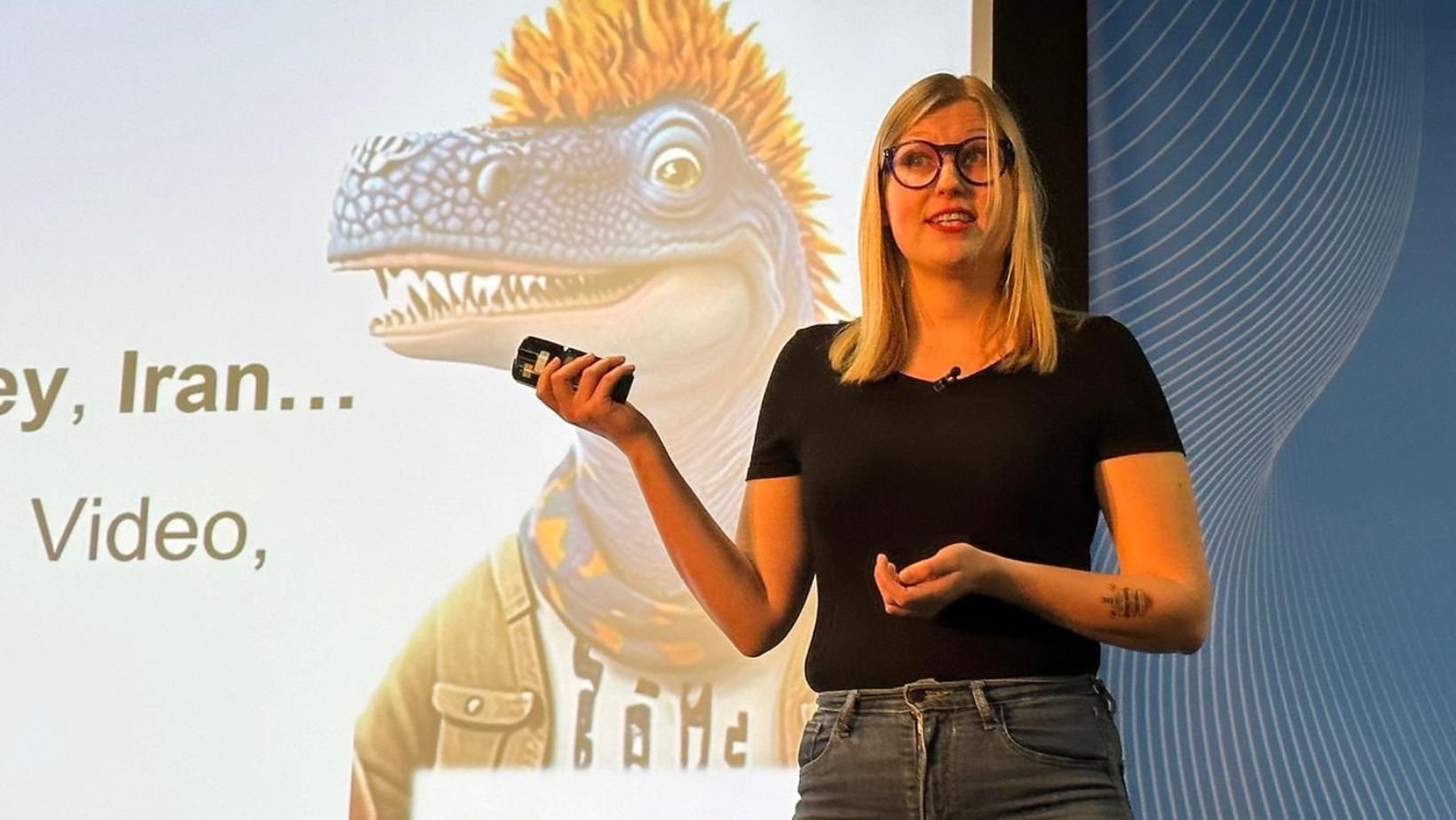
Natalia Witczyk is an International SEO Consultant and CEO of Mosquita Digital specialising in multi-market SEO across Europe, Asia, the US and Latin America. She is also an Associate Professor at TBS Education and a Search Awards judge with a strong focus on scalable, market-led SEO strategies. Currently based between Spain and China.
She’s one of those genuine, down-to-earth professionals the SEO industry really needs.
1. International SEO has been at the core of your career for years. What first drew you to working across markets rather than focusing on just one?
I’ve started my career in marketing in the UK. Outside of work, my hobbies involve learning languages and going to language exchange meetups to hang out with international crowds. Initially, I wasn’t particularly interested in International SEO, however many colleagues and contacts asked me if that’s what I want to do, considering my international background and hobbies.
At some point, having heard the same question over and over, I decided to follow this path instead of fighting it. Surely the fact that others see it in me means it’s my chance to specialise. And it’s been the best choice ever – I get to combine work and travel and no client has ever questioned why I am away that often. Traveling became part of my personal brand.
2. Mosquita Digital works with companies expanding globally. Which countries or regions do you most often support today?
Following my 6-month project in China last year, APAC has become my main market of interest. Prior to that, I’ve worked with the US, UK, Latin America and Western Europe quite extensively, thanks to my language skills. Today, my main focus lies in international scalability and complexity, so the more markets are targeted, the better, as international SEO plays the biggest role.
3. Beyond Google, you’ve worked with Baidu, Naver, Yandex, and others. How does thinking “beyond Google” change the way SEO strategies are built?
As SEOs, we’ve treated Google as a synonym to Search Engine for far too long, making us blindsided. Understanding what is Google’s own product choice and what is a general SE trend is great for following the tendencies and understanding what might be coming next. One very old anecdote comes to mind: many, many years ago, Yandex decided to discontinue backlink signals from their algorithm.
Essential, they wanted to give up on the offsite factors instead of challenging the spammy ones. The experiment was fully rolled out for a year, vertical by vertical, only to be fully rolled back. It was such a disaster as it comes to the quality of the results, Yandex engineers had to undo it completely.
This anecdote makes me chuckle, as it makes it completely clear that a Search Engine today is nothing without links. Links are what made Google great in the first place and this part of the algorithm is to stay. No other Search Engine dared to even entertain such a crazy idea.
4. China is often seen as complex and opaque from the outside. What fascinates you most about working with Chinese platforms and search engines?
Chinese SEOs are one of the smartest on earth. Baidu (Google’s equivalent in China) is very laconic and cautious with their official statements. Most of the Baidu Webmaster Documentation dates over a decade back, and there aren’t any prominent Baidu figures that would communicate in a similar manner that John Mueller and his team do on Google’s side.
So Chinese SEOs have to adopt the constant trial-and-error mentality to figure the SEO out. I find it fascinating and at the same time, I started appreciating all fantastic resources both Googlers and the SEO Community members have developed to make it easier for the newbies to learn.
5. Becoming a brand ambassador for tools like Semrush doesn’t happen by accident. How did that opportunity come about, and what advice would you give to others aiming for a similar role?
When Semrush reached out regarding their ambassador programme, it was a “pinch me” moment. I’ve had some brands reach out to me in the past, however this was the first time I was actually using the product and recommending it to my clients anyway. Representing the Semrush brand in a more official manner was a natural decision. And the answer is consistency.
Nothing happens overnight. Every single speaking engagement, published article and podcast contributed to my personal brand, and years after I “made it” to the level that secured such collaboration. LinkedIn is my platform of choice and has been a great source of contacts and even leads for a long time. I believe it is every consultant’s number one tool to sell themselves and build trust.
6. Do you think generosity and kindness toward less experienced SEOs play an important role in building a healthier industry?
Personally, I’ve been helped out, championed and recommended countless times, and so I owe huge parts of my professional success to many senior colleagues that believed in me early on. Some fantastic SEOs that helped me out over the years include Aleyda Solís, Gerry White, Mark Williams-Cook, Judith Lewis and Charlie Clarke, to name a few. I am proud to say that the SEO community has become more than colleagues. I consider many of these professionals to be my friends.
I hope I can return a portion of that support back to the wider community, and certainly I try to do my best. One thing that I’ve learned to be a very productive way to help is sharing positive feedback when due. For instance, I try to proactively leave LinkedIn recommendations to professionals I have worked with, without them requesting it. I invite everyone to do the same, or find their own way to spread positive contributions.
7. At this stage of your career, what do you value more than you did when you were starting out?
Initially, I was chasing the money, which is understandable when the resources are scarce and as a young person I was eager to improve my day to day life standards. At the moment, I value the flexibility, the peace of mind and the human relationships in each project. I am privileged to be picky about clients.
For instance, very recently I have ended a long term collaboration, due to constant delays in payments. Having to chase every single invoice consumes the time and energy I don’t want to lose at this stage of my life. I think it’s very important to learn how to set your own boundaries, and a huge aspect of that learning is acting when these boundaries are crossed. It’s very liberating.
I acknowledge that it isn’t as straightforward for everyone, and some circumstances might make it more difficult to set those boundaries, however I feel like many freelancers would benefit hugely from actually drawing some lines and communicating their needs and expectations better, instead of suffering in silence.
8. Teaching and coaching are an important part of your work. What do professionals most often lack when they come to you for SEO coaching?
Confidence. It’s the number one reason professionals come to me. When the clients are challenging every of your ideas and resisting the suggestions you made, hearing another professional opinion is often the solution. I find that the Dunning-Kruger Effect is very real among SEO professionals, especially those exceptional ones.
The occasional doubting of one’s own skills is a direct result of the critical thinking we all have to start with. I also spend quite a bit of time bouncing off ideas and debating client approaches. Many professionals have worked from home on their own for many years now and simply miss having someone to talk to about their projects.
9. Each country shapes professionals differently. What has Spain given you professionally that you didn’t expect?
Spain has taught me all about a healthy work-life balance, although I have to say that this isn’t a universal trait here. Too many young professionals are starting to follow the Anglo-Saxon craze for working extra hours and being available 24/7. I was lucky enough to work for the companies here that never expected this kind of commitment. Taking a proper time to have lunch and eat in pieces away from the screen is so important to me these days.
10. That bicycle accident marked a turning point in your life and career. How did slowing down and prioritising self-care change the way you work today?
It feels like this century is all about going faster and doing more, but we hardly ever know how to do less and slow down. For me, the bicycle accident was an important warning sign and thankfully, it came right on time, without serious medical consequences. It could have been much worse.
When something key happens to you, priorities change forever. That’s why I started working for myself full-time, instead of freelancing on the side. I also make sure to schedule what’s important to me. I usually take Fridays off and I make sure my schedule allows me to sleep in when I am back from any travels, especially when I am anticipating jetlag.