
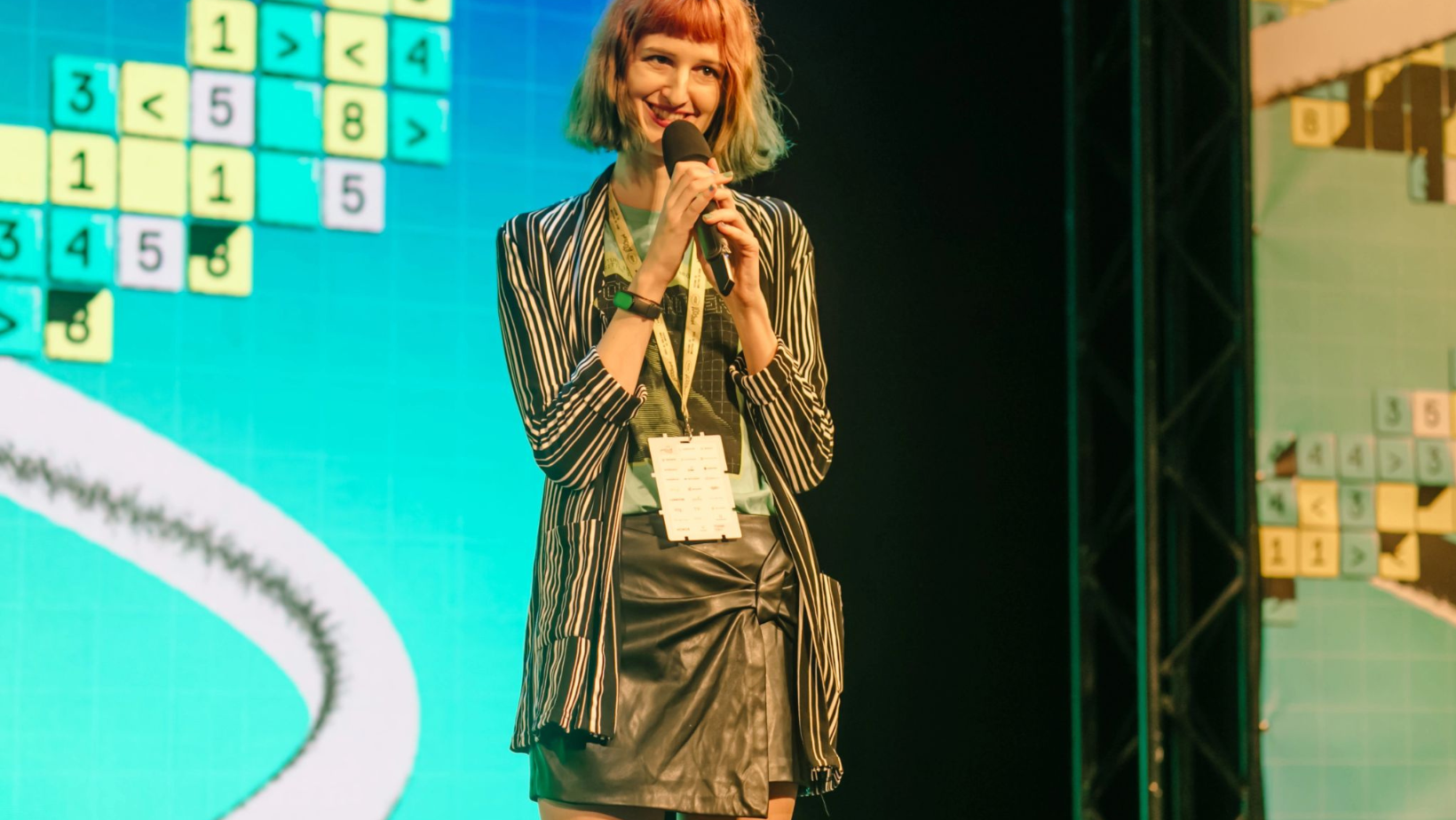
Iva Jovanovic is an SEO and Content Specialist with over six years of experience helping B2B and B2C brands grow through SEO and content strategy. She specialises in building visibility, driving lead generation and supporting e-commerce growth through data-driven SEO. Iva is also the Project Manager of the Belgrade SEO Conference, where she plays a key role in shaping the event and fostering a strong, collaborative SEO community in the region.
Always fun and professional, when she’s not working you’ll likely find her at a live music concert. She absolutely loves them!
1. Your background combines art history, content creation, and SEO. How has that mix shaped the way you approach digital marketing today?
My background has actually helped a lot during my career. It basically shaped the way I research and interpret information, and allowed me to perform research quickly and deeply. When you have to write one paper out of many, and about a piece of a monument that has only a few mentions in general literature, you learn to be able to deep dive quickly and in detail.
My university years have trained me to look closely, question intent, and understand context. It forced me to look beyond the obvious, question assumptions, and look at all sources before concluding anything, which has been very useful in SEO.
2. How did you first get into SEO and content, and what made you decide to pursue this path professionally?
I moved into SEO and content organically. My start came out of a blend between my degree and content marketing, which was working for an agency that worked with art and music clients, which allowed to bring my degree knowledge and learn what marketing looks like and works. After moving on from my museum role and that whole world, I started by writing content and quickly became curious about why certain pieces performed better than others.
Funny thing is, before deciding on art history, I wanted to do computer science, but I abandoned that due to all programs requiring a lot of physics, which was the subject I had most problems doing and understanding (math was completely fine, but physics somehow never made it into my head). So when SEO came, especially tech SEO, I saw my place in it. And it was truly like that – I found my place and got the opportunity to explore SEO, what happens behind the scenes, how websites work, and even go into a bit of web development.
3. You’re deeply involved in organizing conferences and meetups. What’s the most challenging part of building a strong and relevant SEO event program?
I’ve been involved with event organizing, but for a different audience – tech and IT. And so one of my biggest challenges was getting into organizing in a new field and trying to apply the knowledge and experience to a new audience, where the same things don’t necessarily apply.
A big part of the challenge is also building a new community, earning trust, and creating a space where people feel encouraged to share. So we tried different formats – we did an SEO meetup, an Unconference with an SEO track, and an informal discussion we called SEO Talks. We’re still in the beginning stages of getting the SEO community up, but it has been a real pleasure with great turnouts!
4. What can we expect from the next edition of Belgrade SEO Conference in 2026?
We’ll continue from what we had last year, with new speakers, strong and relevant talks, and a program that reflects where SEO is going. The goal, as always, is to give attendees insights from different perspectives and provide clarity and tools they can apply to their projects. We want our talks to make an impact and bring knowledge from experts that the audience here wouldn’t have an opportunity to hear.
We’re also exploring new formats and opportunities for learning, but nothing I can reveal now – you’ll have to follow along on the socials.
5. What makes a talk truly valuable from an attendee’s perspective?
Takeaways – what the audience leaves with after a session. A talk becomes truly valuable when the audience leaves with something concrete, whether that’s an idea to think about, an experiment to try, or a topic they want to explore further. Not every talk needs to deliver instant tactics, but it should spark curiosity or offer a new perspective.
6. Which skills do you believe will become most critical for SEOs over the next few years, and why?
Experimentation, curiosity, and continuous learning will be critical for SEOs in the coming years, along with more collaboration with other digital marketing roles. SEO no longer exists in isolation, so working closely with developers, content teams, product, and data specialists is becoming more and more necessary.
In terms of concrete SEO skills, I am still gonna preach about technical SEO. As I see it, technical SEO will be a must-have foundation. Without it, it’s increasingly difficult to understand how search systems, AI-driven experiences, and complex websites actually work.
7. What do you think makes SEO communities in the Balkans and Europe particularly strong or unique?
Balkan communities are unique because they are highly adaptable and willing to experiment. Many professionals here work across multiple markets, languages, and industries, which forces adaptability and a deeper understanding of search behavior. That environment encourages practical problem-solving, creativity, and openness to testing new approaches.
8. How do you balance strategic thinking with execution across such different projects?
I don’t follow a single formula across projects. I approach every project differently, starting with in-depth research and a deep dive into the industry, business model, and audience. Understanding the context allows me to define the right strategy before moving into execution. That process helps me prioritize what actually matters for each project, rather than applying generic solutions.
9. With SEO evolving so quickly, especially with AI and new search experiences, how do you personally stay up to date and keep learning?
I stay up to date through a mix of curated information and real-world interaction. That includes newsletters like SEOFOMO and Core Updates among many, along with being a member of communities, attending meetups and conferences, watching webinars, reading through trusted LinkedIn sources, and having conversations with friends and peers in the industry.
Staying connected to people doing the work is just as important as following industry news, especially in a field that evolves as quickly as SEO.
10. For someone visiting Belgrade for the first time, what are your top recommendations to really experience the city?
To really experience Belgrade, I’d recommend walking the city as much as possible. The best walk is around the city center and its historic parts. Visiting Kalemegdan is a must, especially during a sunset or sunrise. The next step is exploring Dorcol, the oldest part of the city, full of history, street art, and great food. This is, to me, where the city’s soul is most present. You can even get to the river easily from these parts, and have lovely walk along it too.
On the other side of the city, well a different city technically but still Belgrade, I recommend a walk around Zemun, along the Danube, and a climb to Gardoš Tower. There is also a great option to walk or bike on Ada Ciganlija, a river island that has beaches and bars.
In terms of museums, Nikola Tesla Museum, Museum of Yugoslavia, and National Museum of Belgrade are very nice visits. A visit should also include St. Sava Temple and the Church of Saint Mark, which are a walk away from each other.
Now for the experience, the must-try things are cevapi (ćevapi) with kajmak (cream cheese), pljeskavica, sarma (if in season), burek (meat or cheese, eaten in the morning), and a shot of rakija (plum aka šljivovica is the classic).
(bio)
1. Your background combines art history, content creation, and SEO. How has that mix shaped the way you approach digital marketing today?
My background has actually helped a lot during my career. It basically shaped the way I research and interpret information, and allowed me to perform research quickly and deeply. When you have to write one paper out of many, and about a piece of a monument that has only a few mentions in general literature, you learn to be able to deep dive quickly and in detail.
My university years have trained me to look closely, question intent, and understand context. It forced me to look beyond the obvious, question assumptions, and look at all sources before concluding anything, which has been very useful in SEO.
2. How did you first get into SEO and content, and what made you decide to pursue this path professionally?
I moved into SEO and content organically. My start came out of a blend between my degree and content marketing, which was working for an agency that worked with art and music clients, which allowed to bring my degree knowledge and learn what marketing looks like and works. After moving on from my museum role and that whole world, I started by writing content and quickly became curious about why certain pieces performed better than others.
Funny thing is, before deciding on art history, I wanted to do computer science, but I abandoned that due to all programs requiring a lot of physics, which was the subject I had most problems doing and understanding (math was completely fine, but physics somehow never made it into my head).
3. You’re deeply involved in organizing conferences and meetups. What’s the most challenging part of building a strong and relevant SEO event program?
I’ve been involved with event organizing, but for a different audience – tech and IT. And so one of my biggest challenges was getting into organizing in a new field and trying to apply the knowledge and experience to a new audience, where the same things don’t necessarily apply.
A big part of the challenge is also building a new community, earning trust, and creating a space where people feel encouraged to share. So we tried different formats – we did an SEO meetup, an Unconference with an SEO track, and an informal discussion we called SEO Talks. We’re still in the beginning stages of getting the SEO community up, but it has been a real pleasure with great turnouts!
4. What can we expect from the next edition of Belgrade SEO Conference in 2026?
We’ll continue from what we had last year, with new speakers, strong and relevant talks, and a program that reflects where SEO is going. The goal, as always, is to give attendees insights from different perspectives and provide clarity and tools they can apply to their projects. We want our talks to make an impact and bring knowledge from experts that the audience here wouldn’t have an opportunity to hear.
We’re also exploring new formats and opportunities for learning, but nothing I can reveal now – you’ll have to follow along on the socials.
5. What makes a talk truly valuable from an attendee’s perspective?
Takeaways – what the audience leaves with after a session. A talk becomes truly valuable when the audience leaves with something concrete, whether that’s an idea to think about, an experiment to try, or a topic they want to explore further. Not every talk needs to deliver instant tactics, but it should spark curiosity or offer a new perspective.
6. Which skills do you believe will become most critical for SEOs over the next few years, and why?
Experimentation, curiosity, and continuous learning will be critical for SEOs in the coming years, along with more collaboration with other digital marketing roles. SEO no longer exists in isolation, so working closely with developers, content teams, product, and data specialists is becoming more and more necessary.
In terms of concrete SEO skills, I am still gonna preach about technical SEO. As I see it, technical SEO will be a must-have foundation. Without it, it’s increasingly difficult to understand how search systems, AI-driven experiences, and complex websites actually work.
7. What do you think makes SEO communities in the Balkans and Europe particularly strong or unique?
Balkan communities are unique because they are highly adaptable and willing to experiment. Many professionals here work across multiple markets, languages, and industries, which forces adaptability and a deeper understanding of search behavior. That environment encourages practical problem-solving, creativity, and openness to testing new approaches.
8. How do you balance strategic thinking with execution across such different projects?
I don’t follow a single formula across projects. I approach every project differently, starting with in-depth research and a deep dive into the industry, business model, and audience. Understanding the context allows me to define the right strategy before moving into execution. That process helps me prioritize what actually matters for each project, rather than applying generic solutions.
9. With SEO evolving so quickly, especially with AI and new search experiences, how do you personally stay up to date and keep learning?
I stay up to date through a mix of curated information and real-world interaction. That includes newsletters like SEOFOMO and Core Updates among many, along with being a member of communities, attending meetups and conferences, watching webinars, reading through trusted LinkedIn sources, and having conversations with friends and peers in the industry.
Staying connected to people doing the work is just as important as following industry news, especially in a field that evolves as quickly as SEO.
10. For someone visiting Belgrade for the first time, what are your top recommendations to really experience the city?
To really experience Belgrade, I’d recommend walking the city as much as possible. The best walk is around the city center and its historic parts. Visiting Kalemegdan is a must, especially during a sunset or sunrise. The next step is exploring Dorcol, the oldest part of the city, full of history, street art, and great food. This is, to me, where the city’s soul is most present. You can even get to the river easily from these parts, and have lovely walk along it too.
On the other side of the city, well a different city technically but still Belgrade, I recommend a walk around Zemun, along the Danube, and a climb to Gardoš Tower. There is also a great option to walk or bike on Ada Ciganlija, a river island that has beaches and bars.
In terms of museums, Nikola Tesla Museum, Museum of Yugoslavia, and National Museum of Belgrade are very nice visits. A visit should also include St. Sava Temple and the Church of Saint Mark, which are a walk away from each other.
Now for the experience, the must-try things are cevapi (ćevapi) with kajmak (cream cheese), pljeskavica, sarma (if in season), burek (meat or cheese, eaten in the morning), and a shot of rakija (plum aka šljivovica is the classic).